How Many Marshals and Stewards Do I Need for My Event? Preview: How many marshals…
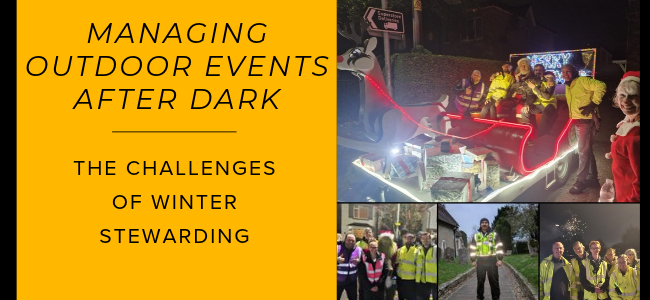
Managing Outdoor Events After Dark
The Challenges of Winter Stewarding
Preview: Managing outdoor events after dark presents a different set of challenges for event organisers. From reduced visibility and pedestrian movement to changing weather conditions and visitor departures, we explore the practical considerations that can help outdoor events operate safely and efficiently throughout the winter months.
Outdoor events are no longer limited to the warmer months. Illuminated woodland trails, Christmas markets, winter food festivals and outdoor sporting events continue to attract visitors throughout November and December, often taking place entirely after sunset.
Although many event management principles remain the same throughout the year, reduced daylight changes how visitors experience and navigate an event. Areas that are straightforward to manage during daylight hours can become more challenging once darkness falls, making preparation, communication and the positioning of event staff particularly important.
How Reduced Visibility Changes Event Operations
During daylight hours, visitors can usually identify entrances, exits, facilities and pedestrian routes without much assistance. After dark, people are more reliant on lighting, signage and directions from event staff to find their way around.
This can be particularly noticeable at events held within parks, gardens, woodland areas or temporary outdoor venues, where permanent lighting may be limited. Even familiar locations can feel quite different at night, especially for visitors attending for the first time.
Organisers should consider how the entire site operates after sunset, rather than concentrating solely on illuminating the main attractions. The route from the car park to the entrance, access to toilets and quieter areas between attractions all deserve attention.
Walking the site after dark during the planning stages can help identify issues that might otherwise go unnoticed during a daytime inspection.
Managing Pedestrian Routes and Poorly Lit Areas
Uneven ground, temporary structures, changes in surface levels and exposed tree roots can all present greater challenges when visibility is reduced. Winter weather can introduce further complications, particularly when pathways become wet, muddy or icy.
At an illuminated trail, for example, visitors are naturally drawn towards the displays and may pay less attention to the ground beneath them. Families with young children, pushchairs and visitors with mobility requirements may also need additional time to navigate certain sections.
Marshals positioned along designated pedestrian routes can provide directions, observe developing congestion and report hazards to the event management team. Their presence can be particularly useful at junctions, changes in ground conditions and where visitors may be unsure which direction to take.
However, staff should complement suitable lighting, accessible routes and other measures identified through the organiser’s risk assessment, rather than being relied upon as a substitute for them.
Visitor Information and Wayfinding After Dark
One of the most common frustrations for visitors at outdoor evening events is not knowing where they need to go. Signage that is perfectly readable during the day may become difficult to see at night, while landmarks used to provide directions can disappear into the darkness.
Clear wayfinding should begin before visitors reach the main event entrance. People arriving by car, public transport or on foot need to understand where they are heading without having to stop repeatedly to ask for assistance.
Stewards should also be familiar with the layout of the event, including accessible routes, toilets, first aid points and designated exits. Consistent information across the staffing team helps prevent confusion and reduces unnecessary movement around the site.
For events attracting families, particularly during the festive season, straightforward directions and approachable staff can make a considerable difference to the overall visitor experience.
The Role of Marshals and Stewards at Night-Time Events
The responsibilities of marshals and stewards do not necessarily change after dark, but the conditions in which they work can make certain aspects of their role more important.
Monitoring pedestrian movement, observing queues, identifying obstructions and reporting changes in crowd behaviour all require attention when visibility is limited. Staff may also find themselves answering more questions from visitors who are unfamiliar with their surroundings.
At a Christmas market, for instance, a steward may notice visitors gathering around a particularly popular stall, causing congestion along a nearby walkway. At a winter sporting event, marshals may identify difficulties where pedestrians and vehicles are moving through neighbouring areas.
In both situations, timely communication allows the event management team to assess conditions and respond in accordance with its agreed procedures.
Staff should receive a clear briefing covering their assigned positions, responsibilities, communication arrangements and escalation procedures, including what to do if lighting fails or weather conditions deteriorate.
Staff Visibility, Communication and Welfare
While considerable attention is given to keeping visitors comfortable during winter events, the welfare of staff working outdoors should not be overlooked.
Marshals and stewards may spend several hours in exposed positions, sometimes with limited opportunities to move around. Cold temperatures, wind and persistent rain can affect concentration and make it more difficult to remain attentive throughout a shift.
Suitable clothing, appropriate high-visibility garments, access to welfare facilities and planned breaks should all be considered.
Communication equipment also needs to be suitable for the environment. Staff working across a large outdoor site may be some distance from their supervisor, making reliable communication particularly important when reporting hazards or requesting assistance.
Managing Visitor Departures After Dark
The end of an outdoor evening event deserves as much consideration as the arrival period, particularly when large numbers of visitors return to car parks or public transport facilities at similar times.
Visitors may be tired, cold or keen to return home, while drivers could be navigating unfamiliar car parks with limited visibility. Where pedestrian and vehicle routes intersect, organisers should have appropriate arrangements in place to manage movement safely.
Car park marshals and stewards can support these arrangements by providing directions, monitoring designated routes and reporting congestion. Staffing requirements should reflect the departure period rather than simply the advertised finishing time of the event.
Preparing Your Event for Reduced Daylight
Successful winter events depend on understanding how the environment changes throughout the day and how those changes influence visitor behaviour.
Reviewing the site after dark, considering pedestrian routes, preparing for adverse weather and ensuring staff understand their responsibilities are all practical steps that can contribute to a better-managed event.
Experienced marshals and stewards provide valuable support within these arrangements, helping organisers maintain awareness of conditions across the site while giving visitors a visible and approachable point of contact.
For visitors, the appeal of an outdoor evening event is often the atmosphere created after sunset. Good planning helps ensure that darkness remains part of the experience rather than becoming an obstacle to enjoying it.

Related Posts