The Difference Between Marshals, Stewards and Security Staff When planning an event, one of the…
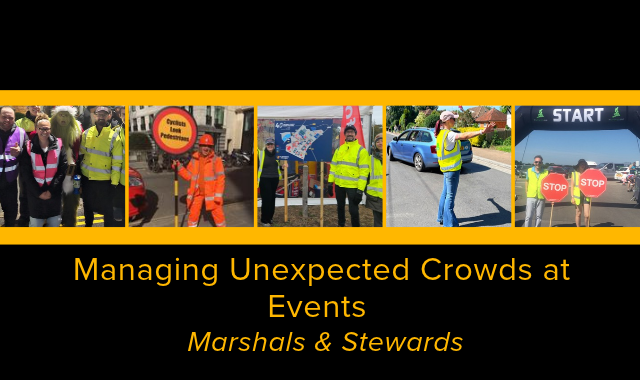
How to Manage Unexpected Crowds at Events Safely
An event may be carefully planned around expected visitor numbers, but what happens when more people arrive than anticipated or large crowds gather in one area at the same time? Unexpected crowd movement can create challenges for even experienced organisers, particularly at public events, festivals and popular attractions. We explore how to recognise potential pressure points, prepare for changes in attendance and understand the important role marshals and stewards play in keeping events organised and visitors safe.
Why Unexpected Crowds Can Become a Problem at Public Events
Every event organiser works with an anticipated attendance figure, whether that comes from advance ticket sales, previous events or estimates based on the venue and programme. However, expected attendance and actual crowd behaviour are two very different things, particularly at events where visitors can arrive freely or move between several attractions.
A Christmas light switch-on might attract considerably more people than previous years because a particular performer has been announced. A community festival could experience an unexpected surge following social media coverage, while a sporting event may see spectators gathering around one entrance rather than using the alternatives provided.
The challenge is not necessarily the total number of people attending, but how those people are distributed across the site. A venue may have sufficient overall capacity while individual entrances, pathways or viewing areas become congested because too many visitors are trying to use them simultaneously.
Understanding where these pressures could develop is an important part of event planning, and one where experienced marshals and stewards can provide valuable support.
Recognising the Early Signs of Event Overcrowding
Crowd problems rarely begin with an entire venue becoming overcrowded. More often, congestion develops gradually in particular locations before affecting surrounding areas.
An entrance queue might extend beyond its designated space, visitors could begin stopping along a narrow pedestrian route, or people leaving one attraction may encounter another crowd moving in the opposite direction.
These situations can appear relatively harmless initially, but they deserve attention because crowd conditions can change quickly.
Organisers should consider how people are likely to move throughout the event, including the moments when large groups may arrive, gather or leave together. The end of a headline performance, the opening of a popular attraction or the arrival of several coaches can create sudden changes in pedestrian movement.
Marshals and stewards positioned at important locations can observe these developments and communicate concerns to event control. Their role is particularly useful because they can recognise changes occurring on the ground that may not be immediately apparent from an overall site plan.
How Event Organisers Can Prepare for Sudden Increases in Attendance
Good crowd management begins long before visitors arrive, with organisers considering how the event might operate if attendance or crowd movement differs from expectations.
This means looking beyond the ideal scenario and considering what could realistically happen during busier periods. If the main entrance becomes congested, are there suitable alternative arrangements? If a popular attraction draws an unusually large audience, how might that affect nearby walkways? Could visitors gathering around food outlets or entertainment areas obstruct access to other facilities?
These questions should form part of the event’s risk assessment and crowd management arrangements, with decisions based on the venue, audience, activities and identified hazards.
For free public events, estimating attendance can be particularly difficult because there may be no ticketing system to provide reliable advance numbers. Previous attendance figures, local publicity, competing events and weather forecasts can all provide useful context, although none guarantees how many people will actually arrive.
The important consideration is having arrangements that allow the event team to recognise changing conditions and respond through an agreed management structure.
Managing Event Entrances, Queues and Pedestrian Routes
Entrances are often among the first areas to experience pressure because visitors naturally arrive in groups, particularly shortly before a scheduled activity begins.
Where several entrances are available, people may still gravitate towards the most visible or convenient one, leaving other access points relatively quiet. Clear signage and well-informed stewards can help visitors understand their options, although any changes to entrance arrangements should follow the agreed event plan.
Queues also require consideration beyond the immediate attraction they serve. A popular food stall might operate efficiently, but if its queue stretches across a pedestrian route, the resulting congestion can affect visitors who have no intention of using that stall.
Similarly, narrow pathways between attractions can become difficult to navigate when people stop to take photographs, check programmes or wait for friends.
Rather than simply placing staff wherever crowds are expected, organisers should identify locations where movement could become restricted and determine how those areas will be monitored throughout the event.
How Marshals and Stewards Support Crowd Management
Professional marshals and stewards provide a practical link between the event management plan and the conditions experienced by visitors.
Their responsibilities may include guiding pedestrians, providing directions, observing queue movements, keeping designated routes clear and reporting developing congestion. The exact duties depend on the event and the position assigned, but the principle remains the same: staff need to understand what normal conditions should look like and recognise when something requires attention.
Consider a summer festival where a performance finishes and large numbers of visitors begin moving towards another stage. Marshals stationed along connecting routes may notice congestion developing at a junction and communicate this to their supervisor.
That information allows event management to assess the situation and decide whether adjustments are needed under the established crowd management procedures.
The value of experienced staff lies partly in understanding when to assist directly and when to escalate a concern, rather than attempting to resolve every situation independently.
Why Communication Matters When Crowd Conditions Change
Even a well-positioned stewarding team will be less effective if information cannot move quickly between different areas of an event.
A marshal near a car park may notice an unexpected volume of arrivals, while entrance stewards begin experiencing longer queues. Elsewhere, staff might observe increasing pedestrian movement towards an attraction that is already busy.
Individually, these observations provide only part of the picture. When communicated through supervisors and event control, they can help organisers understand how conditions are developing across the site.
This is why clear reporting procedures and thorough staff briefings are essential. Marshals and stewards should understand their responsibilities, communication arrangements, escalation procedures and the actions they have been authorised to take.
Emergency access, evacuation arrangements and the involvement of security or medical personnel must also be considered within the wider event plan, rather than leaving individual staff to make decisions outside their responsibilities.
Preparing for the Unexpected at Your Next Event
Unexpected crowds are not always the result of poor planning. Popular events can attract greater interest than anticipated, while visitor behaviour, weather and programme changes can influence where people gather throughout the day.
The important distinction is how effectively an event has prepared for those possibilities.
Organisers who understand their venue’s pressure points, consider changing crowd patterns and establish clear communication procedures are better placed to identify potential problems before they escalate.
Experienced marshals and stewards form part of that preparation by providing visible support to visitors and useful observations to the wider event management team.
Ultimately, effective crowd management is about understanding how people use an event space rather than relying solely on expected attendance figures. When planning, communication and on-the-ground observation work together, organisers are better equipped to respond to changing conditions while maintaining a safe, welcoming and enjoyable environment for everyone attending.

Related Posts